
Athletes are always chasing faster recovery. Ice baths, foam rolling, compression gear, protein timing. The list keeps growing. Now topical CBD for sports recovery has joined that list, and it’s not going away anytime soon.
But is it actually useful, or is it just another wellness trend with a good marketing budget?
Here’s an honest look at what CBD cream can and can’t do for recovery.
What Sports Recovery Actually Involves
Before judging any tool, it helps to understand the problem it’s trying to solve.
When you push your body hard, whether through sprinting, lifting, court sports, or endurance training, you create physical stress in your muscles, tendons, and connective tissue. Blood flow increases. Inflammatory compounds flood the area. Nerve endings become sensitized. Your body is essentially running a repair operation.
This process is normal and necessary. You don’t want to eliminate inflammation entirely. You want to manage it so it doesn’t drag on longer than needed or keep you out of your next session.
The endocannabinoid system and exercise recovery are more connected than most people realize. Your body naturally produces endocannabinoids during and after exercise. Receptors for these compounds are found in muscle tissue, skin, nerve fibers, and connective tissue. CBD interacts with this same system, which is why cannabidiol cream for athletes has a logical foundation, not just a marketing one.
How CBD Cream Works Differently from Oral Recovery Products
CBD cream post-workout soreness treatment is fundamentally different from taking a CBD capsule or gummy.
When you apply a hemp cream for exercise recovery directly to sore tissue, the CBD absorbs through the skin and works locally. This is transdermal CBD for sports injuries, and it bypasses your liver and digestive system entirely. The result is targeted relief in the specific area you apply it, without the systemic effects of an oral product.
CBD absorption into muscle tissue depends a lot on the formulation. A well-made cream uses carrier ingredients that help push CBD past the outer skin barrier and into the tissue underneath. A poorly formulated one sits on the surface and does very little. This is why product quality isn’t just a preference, it’s the difference between the cream working and not working.
How CBD reduces exercise inflammation comes down to its interaction with CB1 and CB2 receptors in the endocannabinoid system. When activated, these receptors can reduce the release of pro-inflammatory compounds and calm sensitized nerve endings. The result, when it works, is less swelling, less stiffness, and reduced pain sensitivity in the treated area.
What the Research Actually Shows
Peer reviewed CBD sports research is growing but still limited in scope.
Animal studies show strong anti-inflammatory effects from CBD. Human studies on CBD topicals show genuine benefits for localized pain conditions. The direct leap to sports recovery in competitive athletes specifically hasn’t been proven in large randomized trials yet.
That said, a 2021 review published in Sports Medicine looked at CBD’s potential role in recovery and concluded that its anti-inflammatory and analgesic properties make it a reasonable candidate for further study in athletic populations. The researchers noted that DOMS relief with CBD topical is one of the more plausible applications given what we know about CBD’s mechanisms.
CBD bioavailability in muscle tissue is still being refined as a concept. Studies confirm that topical CBD does reach subcutaneous tissue and can affect local receptors. Deeper muscle penetration depends on factors like product concentration, skin thickness over the area, and how thoroughly the cream is massaged in.
The honest summary: the evidence supports the mechanism and points in a promising direction. It doesn’t yet confirm that CBD cream speeds up recovery faster than proven alternatives. But it also hasn’t shown it to be ineffective.
CBD Cream vs Other Recovery Methods
How does anti-inflammatory CBD sports cream compare to what athletes already use?
CBD vs ice bath recovery is an interesting comparison. Cold water immersion reduces inflammation by constricting blood vessels and slowing nerve conduction. It’s effective but uncomfortable, time-consuming, and not practical after every session. CBD cream is quicker to apply, easier to use daily, and can be targeted to specific areas. They work through different mechanisms, and there’s no reason you can’t use both.
CBD vs compression therapy recovery is similar. Compression reduces swelling by limiting fluid buildup in tissue. CBD works at the receptor level to reduce inflammatory signaling. Again, different tools with different mechanisms. Combining them is perfectly reasonable.
What CBD cream offers that most alternatives don’t is convenience and specificity. You apply it exactly where you need it, in a few seconds, with no setup. Natural sports recovery without painkillers is a goal for a lot of athletes who are wary of regular NSAID use. CBD cream fits neatly into that space.
Specific Uses: Tendons, Ligaments, and Swollen Muscles
CBD cream for tendon pain and CBD cream for ligament soreness are two of the more specific applications worth addressing.
Tendons and ligaments have lower blood supply than muscle, which is part of why they take longer to heal. They do have endocannabinoid receptors, and localized CBD application may help manage the pain and inflammation that makes tendon and ligament injuries so frustrating to live with.
CBD cream for swollen muscles after intense training has more direct user support. Swelling is part of the inflammatory response, and if CBD genuinely reduces local inflammation, reduced swelling is a logical downstream effect. Users consistently report less puffiness and faster return to normal range of motion when using a quality product consistently after hard sessions.
Choosing the Right Product
The CBD cream ingredients for athletes matter more than the brand name or packaging.
Look for a full spectrum CBD recovery balm or broad spectrum hemp sports cream rather than an isolate. Full spectrum products contain the full range of hemp plant compounds, including minor cannabinoids and terpenes that may enhance CBD’s effects. Broad spectrum keeps those compounds while removing THC. Both are preferable to isolate for recovery purposes.
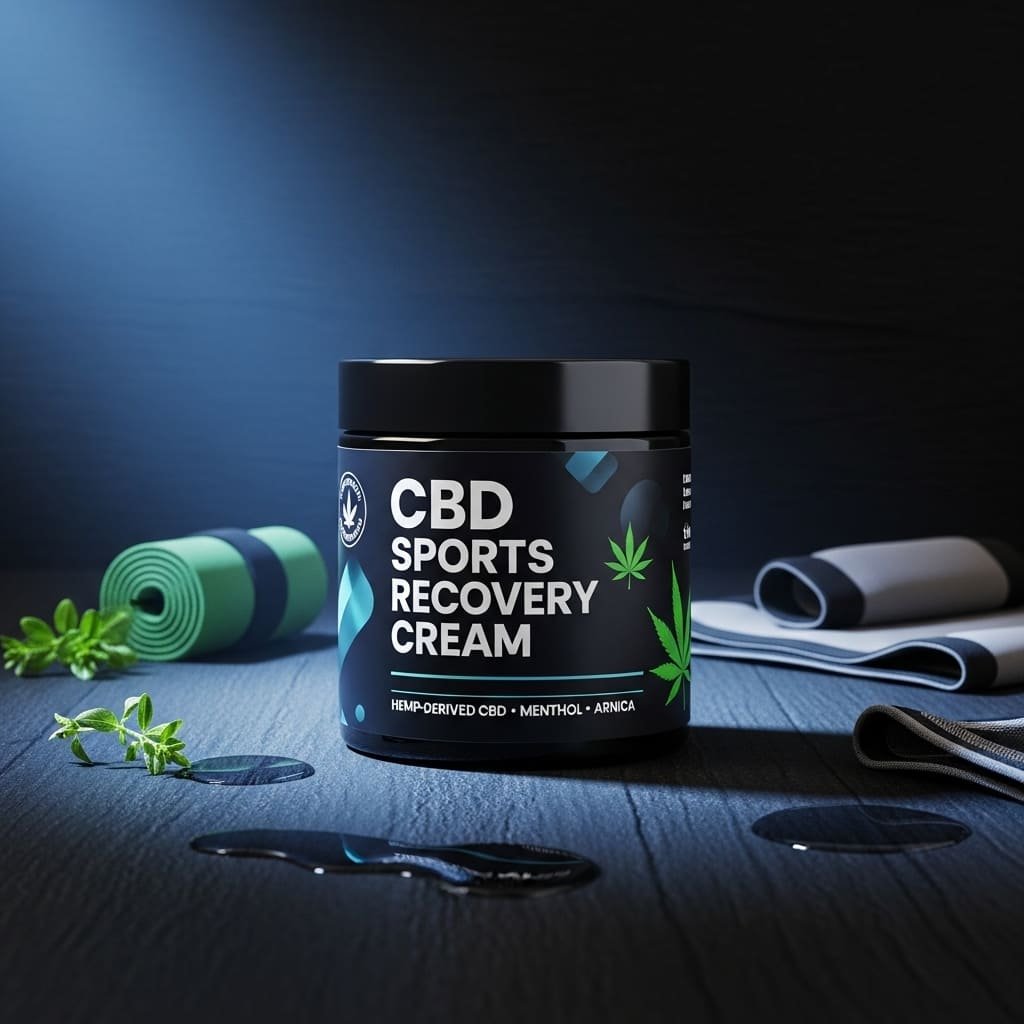
Beyond CBD itself, useful supporting ingredients include arnica (reduces bruising and swelling), menthol (fast-acting cooling pain relief), camphor (improves circulation), and MSM (a sulfur compound with anti-inflammatory properties).
Third party tested CBD sports cream is non-negotiable. Always check for a Certificate of Analysis from an independent lab. It confirms actual CBD content, verifies the THC level is within legal limits, and screens for contaminants. Best CBD cream for sports injuries reviews consistently point to transparent, lab-verified brands as the ones that actually deliver results.
CBD cream dosage for athletes depends on concentration and application area. For a targeted area like a knee or shoulder, a dime-sized amount of a 500mg to 1000mg concentration product is a reasonable starting point. For larger areas like the back or thighs, use more. Apply two to three times daily on heavy training days and once daily for maintenance.
Legal Considerations for Competing Athletes
Hemp derived CBD performance recovery products are federally legal in the US under the 2018 Farm Bill. The World Anti-Doping Agency removed CBD from its prohibited list in 2018.
However, THC remains banned in competition. Full spectrum products carry a small but real risk of THC showing up in a drug test with heavy, prolonged use. Competing athletes should use a verified broad spectrum or isolate product and keep the Certificate of Analysis on hand.
FDA rules on CBD sports products follow the same pattern as other CBD topicals. No sports recovery cream has FDA approval for treating injuries or speeding recovery. The agency focuses on companies making unlawful medical claims rather than restricting sales. Be skeptical of any brand that promises specific recovery outcomes in clinical-sounding language.
CBD cream side effects in athletes are minimal. Skin irritation is the most common, usually from supporting ingredients rather than CBD itself. Patch test new products before applying to large areas.
Real Athlete Results
Real athlete results CBD recovery cream reports are encouraging, with some caveats.
Endurance athletes using CBD cream consistently after long training sessions report meaningful reductions in next-day stiffness and faster return to full training. Strength athletes highlight its usefulness for elbow, knee, and shoulder soreness that accumulates during heavy training blocks. Team sport athletes note that it fits easily into post-game recovery routines without any sedating or performance-impairing effects.
The caveats: athletes who try it once or buy low-quality products rarely report benefits. CBD cream before or after workout timing matters too. Most users find post-workout application more effective, applied within 30 minutes of finishing training while blood flow to the area is still elevated.
The Bottom Line
Is CBD cream helpful for sports recovery? For most athletes, yes, within realistic expectations.
It won’t replace sleep, nutrition, or proper programming. It won’t heal an injury overnight. But as a daily topical tool for managing soreness, reducing inflammation in specific areas, and supporting faster return to training, it has a genuine place in a recovery toolkit.
The key is buying smart. Third party tested, clearly labeled, well-formulated products from transparent brands. Apply consistently, massage it in thoroughly, and give it at least two to three weeks of regular use before making a judgment.
Does CBD cream speed up recovery compared to doing nothing? Probably. Compared to a full recovery protocol? It’s one useful piece of a larger picture.
Frequently Asked Questions
Q1. Should I use CBD cream before or after a workout?
After is generally more effective. Applying it post-workout while blood flow is still elevated helps drive the CBD deeper into the tissue. That said, some athletes apply it before training to pre-emptively manage chronic soreness in known problem areas like knees or shoulders. There’s no hard rule. Try both and see what works for your body.
Q2. How quickly will I notice results using CBD cream for sports recovery?
Most people feel initial relief within 30 to 45 minutes of application. For recovery benefits like reduced next-day soreness and faster return to full movement, consistent use over one to two weeks gives a clearer picture. Single-use results vary a lot. Treat it as a daily habit rather than an as-needed fix.
Q3. Can CBD cream help with tendon and ligament injuries?
It may help manage pain and inflammation around tendons and ligaments, but it won’t repair damaged tissue on its own. Think of it as a support tool during recovery, not a treatment. If you have a serious tendon or ligament injury, work with a physio or sports medicine doctor and use CBD cream as a complement to that plan.
Q4. Is full spectrum better than broad spectrum for athletes?
For pure recovery effects, full spectrum CBD recovery balm tends to get stronger user reports, likely due to the entourage effect of combined cannabinoids. But if you’re subject to drug testing, broad spectrum hemp sports cream is the safer choice. It removes THC while keeping most other beneficial compounds. Either beats isolate for athletic recovery purposes.
Q5. How much CBD should an athlete’s recovery cream contain?
Look for at least 500mg per container as a baseline. Serious athletes dealing with regular soreness often prefer 1000mg to 2500mg concentrations, especially for larger muscle groups or chronic problem areas. Anything under 250mg per container is unlikely to provide meaningful recovery benefits regardless of what the label claims.
Q6. Will CBD cream interfere with my training or performance?
No. Topical CBD doesn’t enter the bloodstream in meaningful amounts and has no sedating, psychoactive, or performance-impairing effects. You can apply it before training, after training, or during the day without any impact on how you feel or perform. CBD cream side effects in athletes are limited to occasional skin sensitivity.
Q7. Can I use CBD cream alongside other recovery methods like ice baths or compression?
Yes, and it makes sense to do so. CBD vs ice bath recovery and CBD vs compression therapy recovery aren’t either-or situations. These methods work through different mechanisms. Using CBD cream alongside cold therapy or compression simply adds another layer of recovery support. There are no known interactions between topical CBD and standard recovery modalities.
Q8. How do I know if a CBD sports cream is actually good quality?
Three things: a clear milligram count of CBD on the label (not just “hemp extract”), a published Certificate of Analysis from a third party lab, and a transparent ingredient list that includes actual active recovery ingredients alongside CBD. If a brand won’t show you lab results or hides its CBD content behind vague labeling, skip it and find one that doesn’t.